Heat Pump Water Heaters
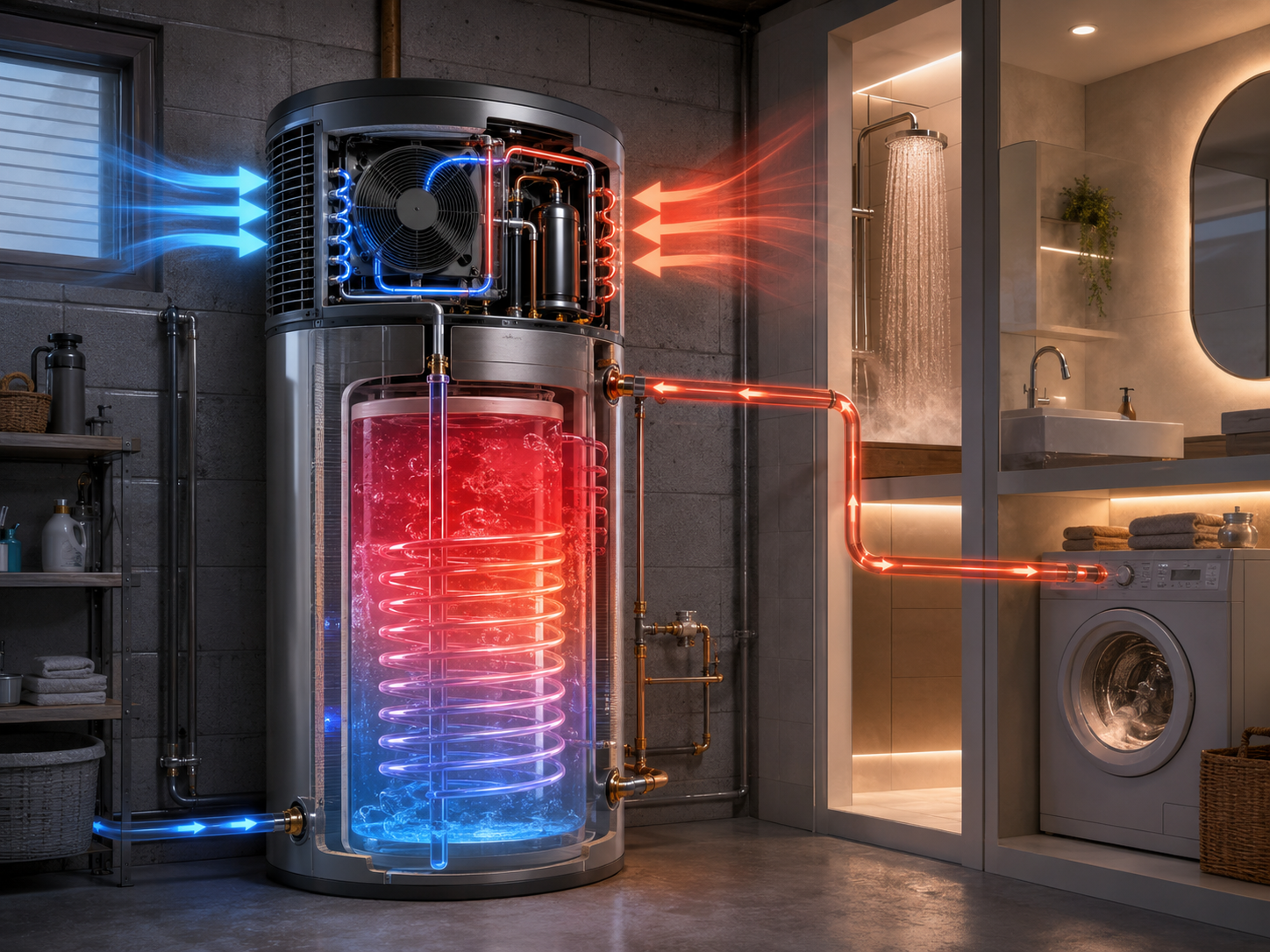
Heat pump water heaters are systems designed to provide domestic hot water more efficiently. They use electricity to move heat from the surrounding air into a water storage tank.
This makes them different from standard electric water heaters, which create heat directly through electric resistance. By transferring heat instead of generating all of it from scratch, heat pump water heaters can reduce the energy needed for hot water.
How Heat Pump Water Heaters Work
A heat pump water heater works by collecting heat from the air around it. This heat is absorbed by refrigerant inside the system, compressed to increase its temperature, and then transferred into the water tank.
As the water warms up, it is stored in the tank until needed. The hot water can then be used for showers, sinks, laundry, dishwashing, and other daily activities.
Where They Are Usually Installed
Heat pump water heaters are often installed in basements, utility rooms, mechanical rooms, garages, or other spaces with enough air volume around the unit.
Because the system collects heat from surrounding air, the installation location matters. The space should be suitable for airflow, maintenance access, drainage, and temperature conditions.
Benefits of Heat Pump Water Heaters
One of the main benefits is energy efficiency. Since the system transfers heat instead of producing all heat directly, it can use less electricity than a conventional electric water heater.
Heat pump water heaters can also support lower-emission buildings, especially when powered by clean electricity. They can be a good match for energy-efficient homes, solar PV systems, and sustainable building upgrades.
Things to Consider
Heat pump water heaters may cost more upfront than standard water heaters, but they can reduce energy use over time.
They also need enough space and airflow to operate properly. Some units may cool the room slightly while operating, because they are removing heat from the surrounding air.
Noise, tank size, recovery time, installation location, drainage, and maintenance should also be considered before choosing a system.
Best Applications
Heat pump water heaters can be useful in homes, apartments, small commercial buildings, and energy-efficient renovation projects.
They are especially attractive when the goal is to reduce electricity use, improve building efficiency, or replace an older electric water heater with a more efficient option.
Heat Pump Water Heaters and Sustainable Buildings
Hot water can be a significant part of building energy use. Using a more efficient water heating system can help reduce overall energy demand.
When combined with good insulation, efficient plumbing design, low-flow fixtures, and renewable electricity, heat pump water heaters can become part of a stronger sustainable building strategy.
Final Thought
Heat pump water heaters bring heat pump technology into everyday hot water use. By moving heat from the surrounding air into a water tank, they can provide hot water more efficiently and support more sustainable homes and buildings.